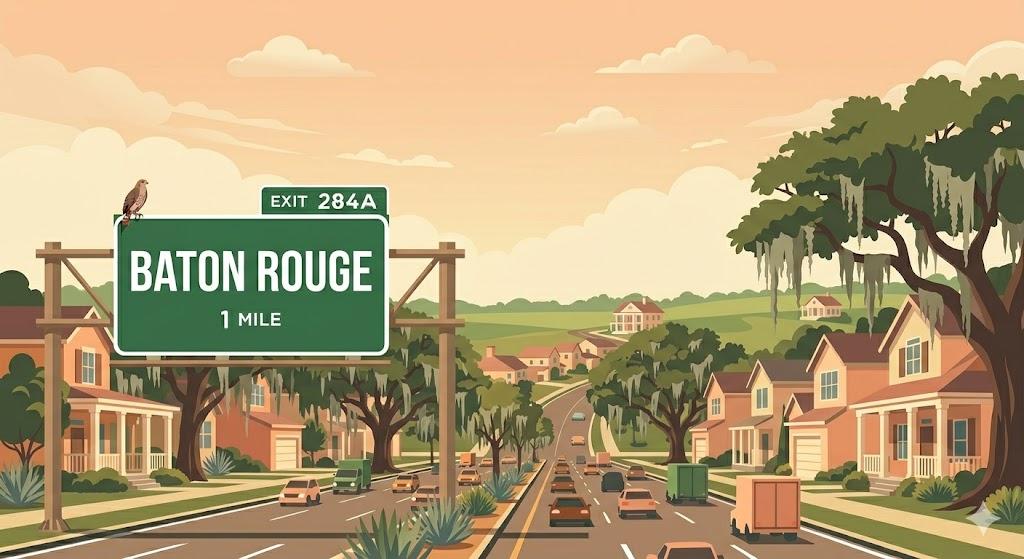
City Home Buyer Guide
Baton Rouge Home Buyer Guide
This Baton Rouge home buyer guide was created to help buyers compare neighborhoods, understand local housing styles, evaluate commute patterns, and prepare for the real costs of buying a home in Louisiana’s capital region. Whether you are relocating, buying your first home, moving closer to LSU, or searching for more space in a suburban area, this guide offers practical local insight designed to stay useful over time. Because neighborhood feel, flood considerations, insurance costs, and buyer competition can vary across Baton Rouge, a local realtor can help buyers compare current conditions and make more informed decisions before moving forward.
Become the Featured Baton Rouge Realtor
Reach local buyers while they compare payments, down payments, neighborhoods, and mortgage options in Baton Rouge.
Founding sponsor first month: $249. Regular placement: $599/month.
Claim This SpotBaton Rouge Home Buyer Guide Overview
Baton Rouge offers buyers a broad mix of housing choices, from historic central neighborhoods and LSU-area homes to growing suburban communities with newer construction. The city attracts first-time buyers, families, professionals, investors, and government employees looking for a balance of affordability, access to jobs, and regional convenience. Buyers may also notice meaningful differences in commute patterns, insurance considerations, and neighborhood feel depending on which part of the metro area they explore.
This guide focuses on evergreen home-buying topics that matter in Baton Rouge, including housing style, flood and insurance considerations, commute realities, local area types, and practical budgeting factors. Because local conditions can change by neighborhood and property type, a local realtor can help confirm current pricing, buyer competition, property condition, and offer strategy before a buyer makes a final decision.
1. Baton Rouge Home Buyer Snapshot
Baton Rouge combines government employment, university activity, healthcare growth, and industrial business activity into one housing market with a wide range of neighborhood styles. Buyers can choose between historic areas near the urban core, established suburban neighborhoods, newer planned communities, and townhome developments near LSU or commuter corridors. The city’s layout, flood considerations, and traffic patterns can make local guidance especially valuable for buyers relocating from outside the area.
| Buyer Factor | What It Means in Baton Rouge |
|---|---|
| Housing Variety | Buyers can compare historic homes, suburban subdivisions, condos, and newer developments across the metro area. |
| Employment Base | Government, healthcare, university, and industrial jobs help support steady housing demand. |
| Commute Patterns | Traffic and bridge access can heavily influence where buyers prefer to live. |
| Insurance Considerations | Flood zones, drainage, and roof condition may affect ownership costs in some neighborhoods. |
| Neighborhood Feel | Some areas offer walkability and historic character while others focus on suburban space and newer homes. |
| Buyer Appeal | Baton Rouge attracts first-time buyers, families, professionals, investors, and relocating households. |
2. Who Baton Rouge May Be Best For
Baton Rouge appeals to buyers looking for flexibility in both housing style and lifestyle. Some buyers prefer central neighborhoods near LSU, downtown, and Mid City, while others focus on suburban areas with larger homes and newer construction. The city’s combination of university activity, government employment, and healthcare growth creates housing demand from many different buyer types.
- First-time buyers searching for a mix of entry-level homes, townhomes, and older suburban neighborhoods.
- Families looking for larger homes, neighborhood amenities, parks, and suburban-style living.
- University employees, medical professionals, and graduate students wanting access to LSU and nearby employment centers.
- Government workers seeking shorter commutes to downtown and state office areas.
- Remote workers looking for more interior space and flexible suburban housing options.
- Relocating buyers moving from higher-cost metro areas who want more home for their budget.
- Investors interested in areas connected to university and healthcare-related rental demand.
3. Home Price Range and Local Price Feel in Baton Rouge
Baton Rouge offers a wide range of pricing depending on neighborhood, flood considerations, school preferences, home age, and commute convenience. Buyers may find more approachable pricing in older established neighborhoods or value-focused suburban areas, while golf communities, larger homes, and premium corridors such as Highland Road or Bocage may carry higher pricing expectations. Condos and townhomes near LSU or downtown can also create different entry points depending on maintenance needs and location.
Because property condition, insurance costs, and buyer competition can vary substantially across Baton Rouge, buyers should compare total ownership costs rather than focusing only on listing prices. A local realtor can help confirm current pricing trends, neighborhood demand, property condition concerns, and offer strategies before buyers move forward.
4. Areas First-Time Buyers May Want to Compare
First-time buyers in Baton Rouge often compare neighborhoods based on commute convenience, home condition, insurance considerations, and long-term affordability. Some buyers prioritize older neighborhoods with character and central access, while others focus on newer suburban developments or lower-maintenance townhome communities. Comparing multiple area types can help buyers understand how pricing, lifestyle, and monthly ownership costs vary across the metro area.
| Area or Area Type | Why Buyers Look There | What to Check With a Local Realtor |
|---|---|---|
| Mid City | Central location, local businesses, and character homes attract many first-time buyers. | Compare renovation quality, drainage history, and traffic patterns. |
| Shenandoah Area | Established suburban feel with a mix of home sizes and neighborhood styles. | Ask about insurance expectations, HOA details, and commute convenience. |
| Broadmoor | Older homes and central access may offer value compared to higher-budget districts. | Review inspection needs, roof condition, and flood-related considerations. |
| Townhome Communities Near LSU | Lower-maintenance ownership and proximity to campus appeal to some buyers. | Compare HOA fees, parking, rental restrictions, and resale demand. |
| Prairieville-Adjacent Areas | Buyers may find newer homes and more suburban-style development. | Evaluate daily commute times, school access, and long-term traffic growth. |
| Older Suburban Subdivisions | Some buyers look here for larger lots and more home space. | Ask about maintenance needs, aging systems, and insurance costs. |
5. Areas Families May Want to Compare
Families moving to Baton Rouge often compare neighborhoods based on commute patterns, available home space, nearby parks, and overall neighborhood feel. Some households prefer established suburban communities with larger lots and mature trees, while others focus on newer developments with sidewalks, community amenities, and updated floor plans. Because school access and daily commute realities can differ widely across the metro area, local guidance can help buyers narrow down neighborhoods that fit both lifestyle and budget goals.
| Area or Area Type | Family Appeal | Local Details to Compare |
|---|---|---|
| South Baton Rouge | Larger homes, suburban neighborhoods, and commuter convenience. | Compare traffic patterns, insurance costs, and nearby amenities. |
| Prairieville Area | Popular for newer homes, growing communities, and additional living space. | Ask about commute times, development growth, and local services. |
| Central Community | Suburban atmosphere with family-oriented neighborhood layouts. | Review home age, lot size, and daily commute routes. |
| Shenandoah and Nearby Subdivisions | Established neighborhoods with parks and community feel. | Compare school access, HOA rules, and long-term maintenance needs. |
| Garden District Adjacent Areas | Mature trees, established streets, and character homes appeal to some families. | Check renovation history, traffic flow, and insurance considerations. |
| Newer Planned Developments | Sidewalks, updated homes, and neighborhood amenities attract growing households. | Review HOA costs, future development plans, and resale flexibility. |
Quick Baton Rouge Home Budget Check
Use this simple estimate to think about monthly payment factors before comparing neighborhoods with a local realtor.
This is only a rough educational estimate. A lender can confirm financing details, and a local realtor can help compare neighborhood costs, taxes, insurance, HOA rules, and property condition.
6. Areas Professionals and Commuters May Want to Compare
Baton Rouge professionals often balance commute convenience, neighborhood style, and housing costs when choosing where to live. Some buyers prioritize quick access to downtown government offices, LSU, healthcare employers, or major highways like Interstate 10 and Interstate 12. Others are willing to accept longer drives in exchange for newer homes, larger lots, or quieter suburban surroundings. Because traffic congestion and bridge access can significantly affect daily routines, buyers should compare routes carefully before narrowing down a location.
| Area or Area Type | Why It May Work | Commute or Lifestyle Tradeoff |
|---|---|---|
| Downtown Baton Rouge | Convenient for government employees and professionals working in the city center. | Smaller housing inventory and more urban traffic patterns. |
| LSU-Area Neighborhoods | Close to the university, healthcare employers, and campus-related activity. | Higher seasonal activity and mixed owner-occupant and rental demand. |
| Mid City | Central location with local businesses, restaurants, and neighborhood character. | Older homes may require more maintenance and renovation review. |
| Perkins Road Corridor | Good access to shopping, dining, and several major commuter routes. | Traffic congestion may increase during peak travel periods. |
| Prairieville Commuter Communities | Appeal to buyers wanting newer homes and suburban-style living. | Longer commutes and growing traffic patterns may affect daily travel. |
| Areas Near Interstate 10 and Airline Highway | Practical for buyers commuting across different parts of the metro area. | Noise, traffic flow, and commercial activity can vary by location. |
7. Higher-Budget and Luxury Buyer Areas in Baton Rouge
Baton Rouge includes several higher-budget neighborhoods and residential corridors that appeal to buyers looking for larger homes, established surroundings, golf-oriented communities, or premium locations near LSU and central business districts. Some buyers prioritize architectural character and mature landscaping, while others focus on privacy, newer construction, or access to country club amenities. Because luxury inventory can vary significantly by lot size, home age, flood considerations, and renovation quality, buyers often benefit from comparing multiple area types before making a decision.
- Bocage is known for established homes, mature trees, and convenient central access.
- The University Club area often appeals to buyers looking for golf-oriented communities and larger residential properties.
- The Highland Road corridor includes a mix of upscale homes, established neighborhoods, and convenient commuter access.
- Higher-end sections of Southdowns attract buyers who want character homes close to LSU and central Baton Rouge.
- Santa Maria communities may appeal to buyers seeking larger homes, golf amenities, and more residential privacy.
- Historic Garden District properties can attract buyers interested in architectural style and established neighborhood character.
Become the Featured Baton Rouge Realtor
Reach local buyers while they compare payments, down payments, neighborhoods, and mortgage options in Baton Rouge.
Founding sponsor first month: $199. Regular placement: $399/month.
Claim This Spot8. Affordable and Up-and-Coming Areas to Watch
Some Baton Rouge buyers focus on neighborhoods that may offer more approachable pricing, renovation opportunities, or additional home space compared to premium districts. In some cases, buyers are willing to accept older homes, longer commutes, or more property updates in exchange for a lower entry point into the market. Because neighborhood conditions, insurance expectations, and property quality can vary widely across the city, buyers should compare multiple areas carefully before making offers.
| Area or Area Type | Why Buyers May Look There | What to Check First |
|---|---|---|
| Broadmoor | Central location and established homes may provide better value than higher-budget areas. | Review inspection reports, roof condition, and drainage concerns. |
| Mid City Transitional Areas | Some buyers are attracted to renovation potential and local business growth. | Compare property updates, traffic patterns, and insurance expectations. |
| Older Suburban Communities East of Downtown | Buyers may find larger lots or more interior space for the price. | Check home systems, commute convenience, and long-term maintenance needs. |
| Portions of North Baton Rouge | Lower entry pricing may appeal to budget-focused buyers. | Compare neighborhood fit, property condition, and nearby amenities carefully. |
| Smaller Townhome Communities | Lower-maintenance ownership may create a more accessible starting point. | Review HOA costs, parking, and resale demand. |
| Older Homes Near Commercial Corridors | Some buyers look here for value and central access. | Inspect drainage, foundation condition, and traffic impact before buying. |
9. Rent vs. Buy in Baton Rouge
For some buyers, renting in Baton Rouge can provide flexibility while learning commute routes, flood considerations, and neighborhood differences. Others may decide buying makes more sense once they expect to stay in the area for several years or want additional living space and long-term stability. The right choice often depends on employment plans, budget flexibility, maintenance comfort, and how familiar a buyer is with the local market.
| Situation | Renting May Make Sense When | Buying May Make Sense When |
|---|---|---|
| Relocating to Baton Rouge | You want time to learn neighborhoods, traffic patterns, and flood considerations. | You already understand the market and plan to stay long term. |
| Working Near LSU | Your employment or school plans may change within a few years. | You expect to remain connected to the area and want more stability. |
| First-Time Buyers | You are still building savings or learning monthly ownership costs. | You are financially prepared for maintenance, insurance, and closing costs. |
| Remote Workers | You may relocate again or are testing different neighborhoods. | You want dedicated office space and more long-term flexibility at home. |
| Families Seeking More Space | You are still narrowing down commute and school preferences. | You are ready to settle into a neighborhood that fits long-term needs. |
10. Down Payment Expectations for Baton Rouge Buyers
Home buyers in Baton Rouge should plan for more than just the purchase price when preparing their budget. In addition to a down payment, buyers may need funds for inspections, insurance setup, closing costs, moving expenses, and early maintenance items. Because older homes, flood considerations, and Louisiana weather can affect ownership costs, financial preparation is especially important before beginning a home search.
- Buyers should budget for both the down payment and closing costs before shopping for homes.
- Inspection expenses may increase when buyers request additional roof, drainage, or foundation evaluations.
- Flood-prone properties may require additional insurance planning and emergency reserves.
- Moving expenses, utility setup costs, and immediate repairs are often overlooked during budgeting.
- Older homes may require extra cash reserves for maintenance after closing.
- HOA dues and prepaid insurance costs may affect the total cash needed at closing.
- A local lender and realtor can help buyers compare realistic monthly affordability before narrowing down neighborhoods.
11. Monthly Payment Reality Factors in Baton Rouge
Many Baton Rouge buyers initially focus on listing price, but the full monthly ownership cost often depends on several additional factors. Property taxes, insurance costs, flood zone considerations, HOA dues, and long-term maintenance can all affect affordability in different ways across the metro area.
Buyers comparing neighborhoods such as Mid City, Prairieville-area communities, or South Baton Rouge subdivisions may notice meaningful differences in home age, insurance expectations, and ongoing upkeep. A local realtor can help buyers compare neighborhoods that appear similar online but differ in total monthly cost, property condition, and long-term maintenance expectations.
| Payment Factor | Why It Matters | What Buyers Should Ask |
|---|---|---|
| Home Price | Higher purchase prices usually increase monthly ownership costs. | How competitive are similar homes in this area right now? |
| Down Payment | The amount paid upfront can affect long-term affordability and cash reserves. | How much emergency savings should remain after closing? |
| Property Taxes | Taxes can vary by neighborhood, assessment, and property type. | How may taxes change after the purchase? |
| Home Insurance | Flood risk, roof condition, and home age may influence insurance costs. | Does this property require additional flood-related coverage? |
| HOA Fees | Townhome and planned communities may include monthly association costs. | What services or restrictions are included with the HOA? |
| Maintenance and Repairs | Older Baton Rouge homes may require more ongoing upkeep. | What major systems or repairs should buyers budget for soon? |
| Loan Structure | Financing choices can affect payment flexibility and long-term planning. | What payment range feels comfortable beyond the listing price? |
12. Closing Costs and Extra Cash Buyers Should Plan For
Baton Rouge buyers should prepare for more than the down payment when budgeting for a home purchase. Depending on the property type, neighborhood, and financing structure, several additional expenses may appear before and shortly after closing.
- Home inspections are commonly recommended, especially for older homes or properties with prior renovation work.
- Appraisal and lender-related fees may apply during the financing process.
- Title services, escrow coordination, and recording fees are typical closing expenses.
- Prepaid homeowners insurance and property taxes may increase upfront cash needed at closing.
- Flood insurance setup or drainage-related evaluations may apply in some neighborhoods.
- Moving costs, utility setup, and immediate home purchases are often overlooked during budgeting.
- Older homes may require repair reserves for roofing, HVAC systems, plumbing, or moisture-related maintenance.
- Many buyers choose to keep emergency cash available after closing for unexpected repairs or weather-related issues.
13. Property Tax Notes for Baton Rouge Buyers
Property taxes are an important part of long-term affordability in Baton Rouge. Buyers comparing neighborhoods, suburban developments, and older established communities may notice differences in assessed values, exemptions, and total ownership costs.
Taxes may also change over time after a home sale or reassessment. Buyers should review estimated taxes carefully rather than relying only on a seller’s current payment history. A local realtor, lender, or tax professional can help explain how taxes may affect total monthly housing costs before a buyer commits to a specific neighborhood.
| Tax Factor | Why It Can Affect Affordability | What to Review Before Buying |
|---|---|---|
| Property Assessment | Assessed value can influence annual tax obligations. | Could the assessment change after the purchase? |
| Neighborhood Location | Taxes may vary between different parts of the Baton Rouge area. | How do taxes compare between similar neighborhoods? |
| Home Value Range | Higher-value homes may create larger annual tax costs. | Does the total payment still fit the long-term budget? |
| Newer Developments | Planned communities may include additional local costs or assessments. | Are there extra community-related fees to review? |
| Exemptions and Ownership Changes | Tax situations may differ between current owners and future buyers. | What exemptions or adjustments may apply after closing? |
14. Home Insurance and Local Risk Factors
Insurance and weather-related considerations play an important role in many Baton Rouge home purchases. Flood zones, heavy rain, humidity, roof condition, and drainage patterns can all affect both ownership costs and long-term maintenance planning.
Buyers comparing homes in older neighborhoods, suburban developments, or low-lying areas should pay close attention to disclosures, inspection findings, and insurance expectations. Local guidance can help buyers avoid surprises that may not appear clearly in online listings or marketing photos.
| Risk or Cost Factor | Why It Matters | What Buyers Should Check |
|---|---|---|
| Flood Risk | Some Baton Rouge areas may require additional flood-related review. | Review flood maps, prior claims, and drainage history. |
| Heavy Rain and Drainage | Drainage performance can affect long-term property condition. | Ask about grading, standing water, and neighborhood drainage patterns. |
| Humidity and Moisture | Louisiana humidity may increase maintenance needs over time. | Inspect ventilation, moisture control, and signs of water intrusion. |
| Older Roofs | Roof condition may influence both insurance availability and maintenance costs. | Review roof age, repair history, and inspection findings. |
| Older Homes | Historic or older homes may require system updates. | Check plumbing, electrical systems, and foundation condition. |
| Storm Exposure | Severe weather and hurricane-related impacts may affect insurance planning. | Ask about storm preparation and prior weather-related repairs. |
15. Commute and Transportation Notes for Baton Rouge
Baton Rouge buyers often compare neighborhoods based on commute convenience as much as home style or price range. Interstate 10, Interstate 12, Airline Highway, and major river crossings can all affect daily travel patterns across the metro area.
Downtown Baton Rouge, LSU, healthcare employers, and industrial corridors create different commuting priorities depending on where buyers work. Some households prefer central neighborhoods such as Mid City or Southdowns, while others prioritize newer suburban developments in Prairieville or nearby commuter communities. A local realtor can help buyers compare the tradeoffs between commute convenience, home size, neighborhood style, and long-term lifestyle fit.
| Commute Factor | Why Buyers Compare It | Local Question to Ask |
|---|---|---|
| Interstate 10 and Interstate 12 Access | Major highways influence daily commuting across the region. | How does traffic typically affect this route? |
| Bridge and River Crossings | River access can change commute convenience significantly. | Are there common congestion points during work hours? |
| Downtown Baton Rouge Access | Government and professional workers often prioritize central access. | Would a central neighborhood better fit the work schedule? |
| LSU and Medical Corridors | University and healthcare employees may prefer nearby neighborhoods. | How does event traffic or campus activity affect the area? |
| Prairieville and Suburban Growth Areas | Buyers may gain larger homes but face longer commutes. | Does the commute tradeoff fit long-term lifestyle goals? |
| Baton Rouge Metropolitan Airport Access | Frequent travelers may value easier airport connections. | How convenient is airport access from this neighborhood? |
16. Local Economy and Job Base in Baton Rouge
Baton Rouge has a diverse economy supported by government, education, healthcare, industrial activity, and transportation. Louisiana state government and Louisiana State University both play major roles in the local job market, while healthcare systems, logistics companies, and businesses connected to the Mississippi River petrochemical corridor also influence where people choose to live.
Buyers often compare commute routes, neighborhood convenience, and long-term lifestyle fit based on where they work. Areas near Downtown Baton Rouge, LSU, Interstate 10, and Airline Highway may appeal differently depending on daily travel needs. A local realtor can help buyers compare neighborhoods that balance commute convenience, home style, insurance considerations, and budget priorities.
| Local Economy Factor | Why It Matters for Buyers | What to Ask Locally |
|---|---|---|
| Louisiana state government | Supports steady demand near Downtown Baton Rouge and government offices | Ask which neighborhoods may offer easier weekday commuting |
| Louisiana State University | Creates demand from students, faculty, healthcare workers, and investors | Compare owner-occupied areas versus higher student rental activity |
| Healthcare employers | Influence housing demand near medical corridors and central neighborhoods | Ask about traffic patterns and nearby housing styles |
| Petrochemical corridor industries | Support employment tied to industrial and logistics operations | Compare commute tradeoffs near major highway routes |
| Construction and suburban growth | Drive development in Prairieville-adjacent and suburban communities | Ask about newer developments, HOA rules, and infrastructure |
| Transportation and port activity | Influence traffic flow near River Road, Interstate 10, and Airline Highway | Compare real-world commute patterns during peak hours |
17. Common Buyer Mistakes in Baton Rouge
Baton Rouge buyers often discover that neighborhoods with similar listing prices can carry very different long-term costs, commute experiences, and maintenance expectations. Flood zones, drainage concerns, home condition, and bridge traffic can all affect daily life in ways that may not appear clearly in online listings.
- Focusing only on listing price instead of total monthly ownership costs
- Underestimating flood insurance or drainage-related concerns
- Choosing a neighborhood before testing commute routes during peak traffic
- Skipping detailed inspections on older homes or renovated properties
- Assuming all suburban subdivisions offer similar amenities or school access
- Overlooking roof condition, HVAC age, or humidity-related maintenance issues
- Not reviewing HOA rules and fees before purchasing in planned communities
- Judging neighborhoods only by online photos without visiting in person
- Assuming every part of Baton Rouge competes at the same pace
- Failing to compare insurance costs between similar homes in different areas
18. Smart Local Buying Tips for Baton Rouge
Baton Rouge buyers often benefit from spending extra time comparing neighborhoods, flood considerations, and commute patterns before narrowing their search. Homes with similar prices can differ significantly in insurance requirements, renovation quality, drainage setup, and daily traffic convenience.
Local guidance can help buyers ask better questions and avoid surprises that may not appear clearly in listing descriptions. Comparing older central neighborhoods with newer suburban developments may also help buyers better understand maintenance expectations and long-term lifestyle fit.
| Buying Tip | Why It Helps | Who Can Help |
|---|---|---|
| Visit neighborhoods at different times of day | Traffic and activity levels can vary widely across Baton Rouge | Local realtor |
| Compare flood zone and drainage history | Insurance and maintenance costs may differ between nearby homes | Local realtor and insurance agent |
| Inspect older homes carefully | Roof, plumbing, and electrical systems may affect long-term costs | Home inspector |
| Review total ownership costs early | Taxes, insurance, HOA fees, and maintenance can change affordability | Lender and local realtor |
| Compare commute routes before choosing an area | Bridge traffic and Interstate 10 congestion can affect daily routines | Local realtor |
| Ask about prior water intrusion | Past drainage issues may influence future maintenance planning | Seller disclosure review and inspector |
| Compare townhome and single-family options | Maintenance responsibilities and HOA structures can differ significantly | Local realtor and lender |
| Maintain repair reserves after closing | Gulf Coast weather and humidity can create ongoing maintenance needs | Local realtor and contractor |
Become the Featured Baton Rouge Realtor
Reach local buyers while they compare payments, down payments, neighborhoods, and mortgage options in Baton Rouge.
Founding sponsor first month: $149. Regular placement: $249/month.
Claim This Spot19. How a Local Realtor Can Help Baton Rouge Buyers
Baton Rouge includes a wide mix of historic neighborhoods, suburban subdivisions, LSU-area communities, and commuter-focused developments. Buyers often benefit from local guidance when comparing areas that may look similar online but differ in flood considerations, commute convenience, home condition, and long-term ownership costs.
- Help compare neighborhoods based on commute routes, lifestyle, and budget priorities
- Explain differences between older homes and newer construction communities
- Identify inspection concerns common in humid Gulf Coast climates
- Help buyers compare flood zone considerations and drainage-related questions
- Provide insight into LSU-area demand and owner-occupied versus investment-focused areas
- Help buyers understand how taxes, insurance, HOA fees, and maintenance affect affordability
- Compare buyer competition and market pace across different parts of Baton Rouge
- Assist with offer strategy, negotiation timing, and property condition review
20. Featured Realtor Opportunities in Baton Rouge
CityBuyersGuide.com gives local realtors and brokers an opportunity to appear in front of buyers while they research neighborhoods, compare monthly costs, and learn about Baton Rouge housing decisions. Buyers visiting this page are often still in the research stage, making this a useful place for agents to build local visibility and present themselves as a trusted resource.
Featured placement opportunities may appeal to buyer agents, relocation specialists, LSU-area experts, suburban community specialists, and realtors focused on flood-conscious home searches. Sponsorship placement allows professionals to connect their brand with helpful city-specific guidance rather than traditional hard-sell advertising. Realtors who understand Baton Rouge commute patterns, insurance concerns, neighborhood personalities, and property condition differences may find strong alignment with buyers looking for practical local insight.
Start Your Baton Rouge Home Search With Better Local Questions
Baton Rouge offers a wide variety of housing styles, neighborhood personalities, and commute experiences. Buyers often benefit from comparing more than just listing prices when narrowing down areas. Flood zones, insurance costs, bridge traffic, drainage concerns, HOA rules, and home condition can all affect long-term ownership experience.
Before making a final decision, buyers should compare neighborhoods in person, review total monthly ownership costs carefully, and ask detailed questions about maintenance, commute patterns, and property history. A local realtor can help buyers better understand the tradeoffs between older central neighborhoods, suburban subdivisions, LSU-area communities, and newer developments across the Baton Rouge area.
Baton Rouge Home Buyer FAQ
Is Baton Rouge a good place to buy a home?
Baton Rouge can appeal to a wide range of buyers because it offers urban neighborhoods, suburban communities, LSU-area housing, and newer developments. The city also benefits from a diverse economy tied to government, healthcare, education, and industry. Buyers should compare commute routes, flood considerations, insurance costs, and neighborhood style before deciding where to focus their search.
What should first-time buyers compare in Baton Rouge?
First-time buyers often compare home condition, insurance costs, commute convenience, neighborhood feel, and maintenance expectations. Areas such as Mid City, Broadmoor, Shenandoah, and Prairieville-adjacent communities may offer very different ownership experiences. A local realtor can help buyers compare total ownership costs and identify important tradeoffs between older homes and newer developments.
Are there affordable areas for buyers in Baton Rouge?
Some buyers explore Broadmoor, Mid City transitional areas, older suburban subdivisions, and certain value-focused sections of North Baton Rouge when looking for more approachable entry points. Affordability can vary significantly depending on property condition, flood zone considerations, insurance requirements, and renovation needs. Buyers should compare long-term costs alongside the initial purchase price.
What local costs should Baton Rouge buyers watch?
Baton Rouge buyers often pay close attention to homeowners insurance, flood insurance, property taxes, HOA dues, maintenance costs, and potential drainage-related repairs. Older homes may also require additional reserves for roofing, HVAC systems, or renovation updates. Buyers should compare total monthly ownership costs rather than focusing only on the listing price of a property.
How can a local realtor help buyers in Baton Rouge?
A local realtor can help buyers compare neighborhoods, understand commute tradeoffs, review flood and drainage considerations, and evaluate differences between historic homes and newer construction communities. Realtors may also help buyers understand local market pace, property condition concerns, and insurance-related questions that are not always obvious in online listings.